

Introducing
ELITE HOME CARE
Your Annual Home Inspection — because peace of mind is priceless.
Our reputation is built on accountability, responsibility, and care for our clients. ELITE Home Care is how we honor that promise long after we finish your remodel. In addition to the 5-year Workmanship Guarantee you receive when your project is complete, each year we come back to your home for a thorough walk-through — not just of what we built, but your entire home, to identify minor issues before they become costly emergency repairs!

Our annual membership program includes:
Yearly Home Care inspection with 10% off repairs, priority scheduling,
plus a 2-hour consultation with an ELITE designer to plan future home improvements!
What we inspect
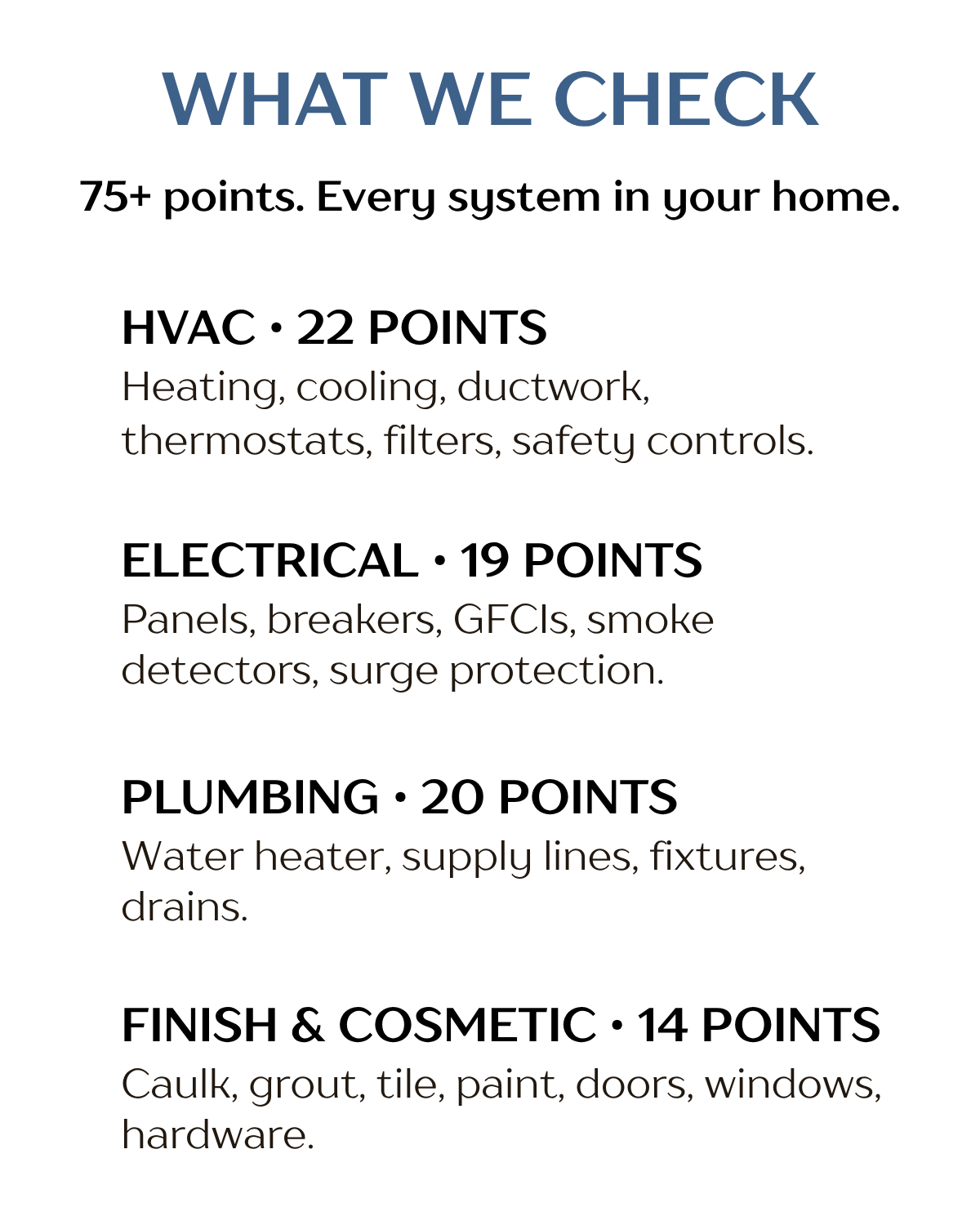
HVAC | 22 Points
COOLING SIDE
1. Inspect & clean outdoor condenser coils
2. Inspect & clean indoor evaporator coils
3. Check refrigerant levels and pressure
4. Inspect refrigerant lines for leaks or wear
5. Flush & test condensate drain line
6. Test condensate pan safety switch
7. Clear debris from outdoor unit and inspect cabinet
8. Test compressor performance and amperage draw
HEATING SIDE
1. Inspect heat exchanger for cracks or corrosion
2. Inspect & test burner assembly
3. Check ignition system, flame sensor, and pilot
4. Test for carbon monoxide and gas leaks
5. Inspect flue and venting system
SHARED COMPONENTS
1. Replace air filter + recommend correct MERV rating for the home (pets / allergies)
2. Test and calibrate thermostat
3. Inspect & clean blower motor and wheel
4. Lubricate motors and bearings
5. Tighten electrical connections, test capacitors and contactors
6. Inspect accessible ductwork for leaks, seals, and insulation
7. Inspect supply & return registers and grilles
8. Test safety switches and disconnect box
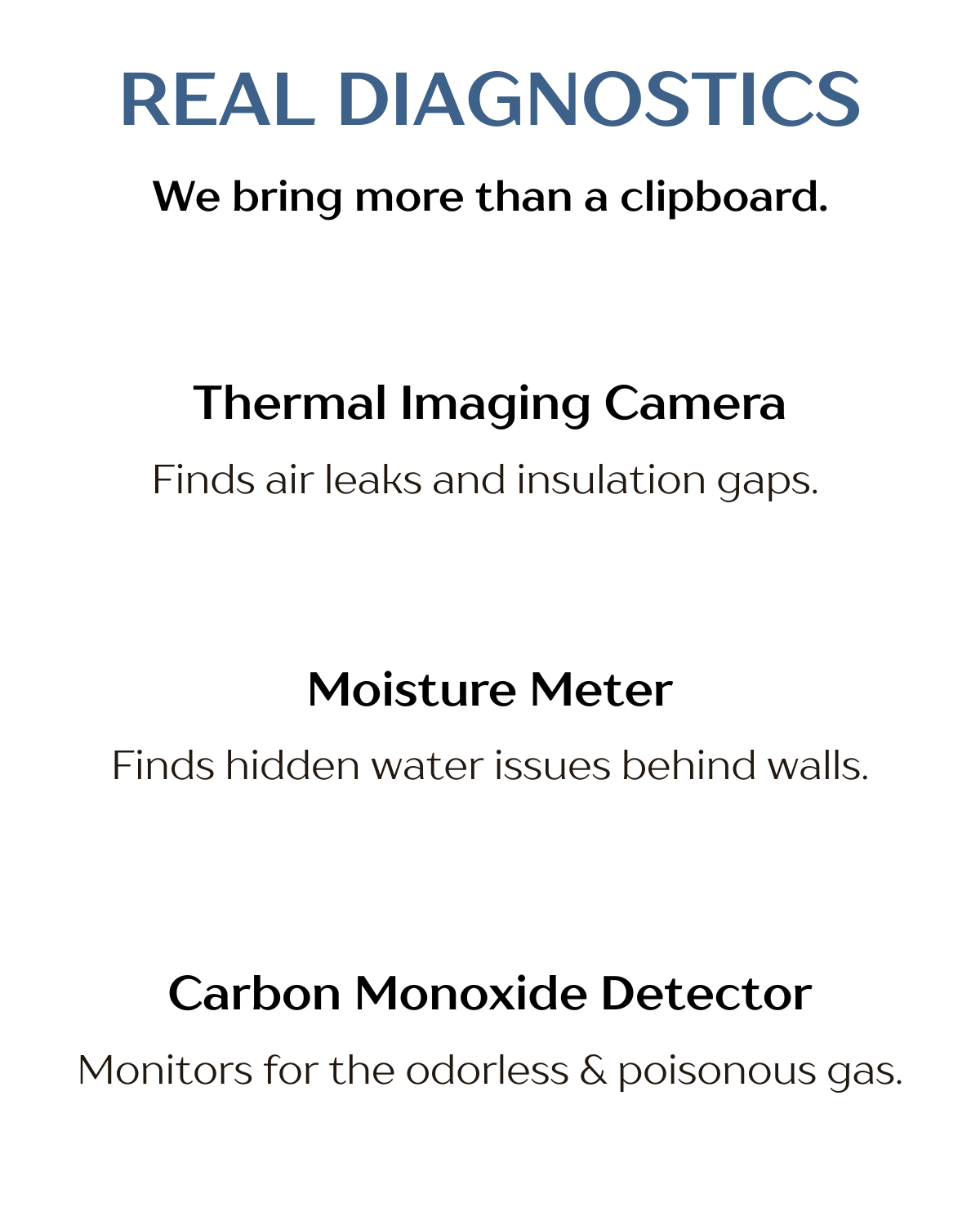
9. Thermal imaging scan at windows, doors, and accessible exterior penetrations — identify air leaks and insulation gaps
FINISH, EXTERIOR & COSMETIC | 14 Points
1. Bathroom caulk and silicone — tub, shower, vanity, toilet base (waterproof integrity, moisture signs)
2. Kitchen caulk — countertop-to-backsplash, sink seal, island gaps
3. Tile and grout — bath and kitchen (cracks, missing grout, mildew)
4. Interior wall and ceiling cracks — note location and size for tracking
5. Exterior cracks — stucco, masonry, foundation visible at grade
6. Exterior caulk — windows, doors, penetrations, trim joints
7. Door alignment and operation — interior and exterior, including weatherstripping
8. Moisture meter scan — drywall around bath/kitchen wet zones, near windows, and any visible staining
9. Cabinet hinges and drawer slides
10. Windows — operation & glazing
11. Overall paint condition, trim & baseboards
12. Decks & exterior wood
13. Gutters
14. Garage door
ELECTRICAL | 19 Points
1. Service entrance and meter base — visible damage, clearances, secure attachment
2. Main electrical panel — mounting, corrosion, signs of overheating or arcing
3. Circuit breakers — operation, sizing, no double-tapped wires
4. Sub-panels — same checks where applicable
5. Panel labeling — verify each breaker is correctly labeled and legible6. Grounding and bonding — connections at panel and water/gas
7. GFCI outlets — test and reset (bath, kitchen, garage, outdoor, basement)
8. AFCI breakers — test (bedrooms and living areas per code)
9. Standard outlets and switches — function, condition, no buzzing or discoloration
10. Light fixtures — operation and secure mounting
11. Visible wiring — fraying, damage, exposure at accessible points1
2. Junction boxes — covers in place, no exposed splices
13. Smoke detectors — function, placement, replace if 10+ years old
14. Carbon monoxide detectors — function and placement
15. Exterior outlets — weatherproof covers and GFCI protection
16. Outdoor lighting and landscape circuits — function and condition
17. Dedicated appliance circuits — HVAC, range, dryer, water heater
18. Surge protection — whole-home device installed (recommend if absent)
19. Thermal imaging scan of main panel and major junction points — identify hot spots indicating overheating connections
PLUMBING | 20 Points
1. Main water shutoff valve — locate and exercise
2. Water pressure test — verify within safe range (40–80 PSI)
3. Pressure regulator (PRV) — operation and setting
4. Water heater — anode rod, T&P valve test, sediment flush, age and condition
5. Water heater connections — supply, discharge, gas line if applicable
6. Visible supply lines under every sink — corrosion, drips, condensation
7. Angle stops at every fixture — operate and verify seal
8. Faucets — drip check, aerator clean
9. Toilets — flush, fill, base leak, supply line, running tank
10. Tubs and showers — diverter, drain flow, caulk and grout integrity
11. Sink and floor drains — flow rate test
12. Garbage disposal — operation and leak check
13. Dishwasher connections — supply and drain lines
14. Washing machine hoses — condition (recommend braided steel if rubber)
15. Hose bibs and outdoor spigots — drip and operation
16. Visible drain pipes and P-traps — corrosion or leaks
17. Sewer line cleanout — locate and check accessibility
18. Sump pump (if installed) — operation test
19. Gas line connections at appliances — visible inspection (water heater, range, dryer)
20. Whole-home water filtration system — test water quality and filter condition